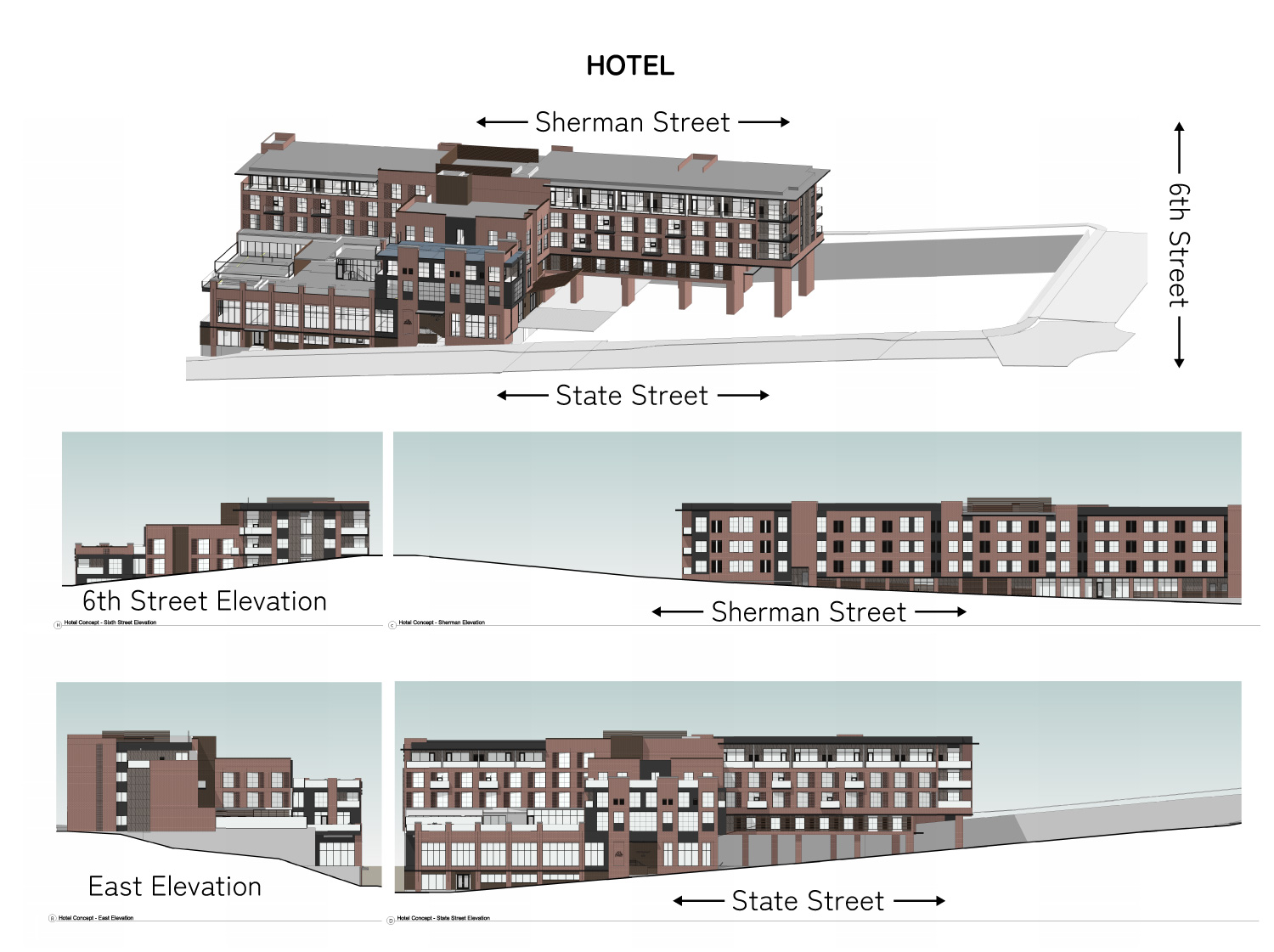
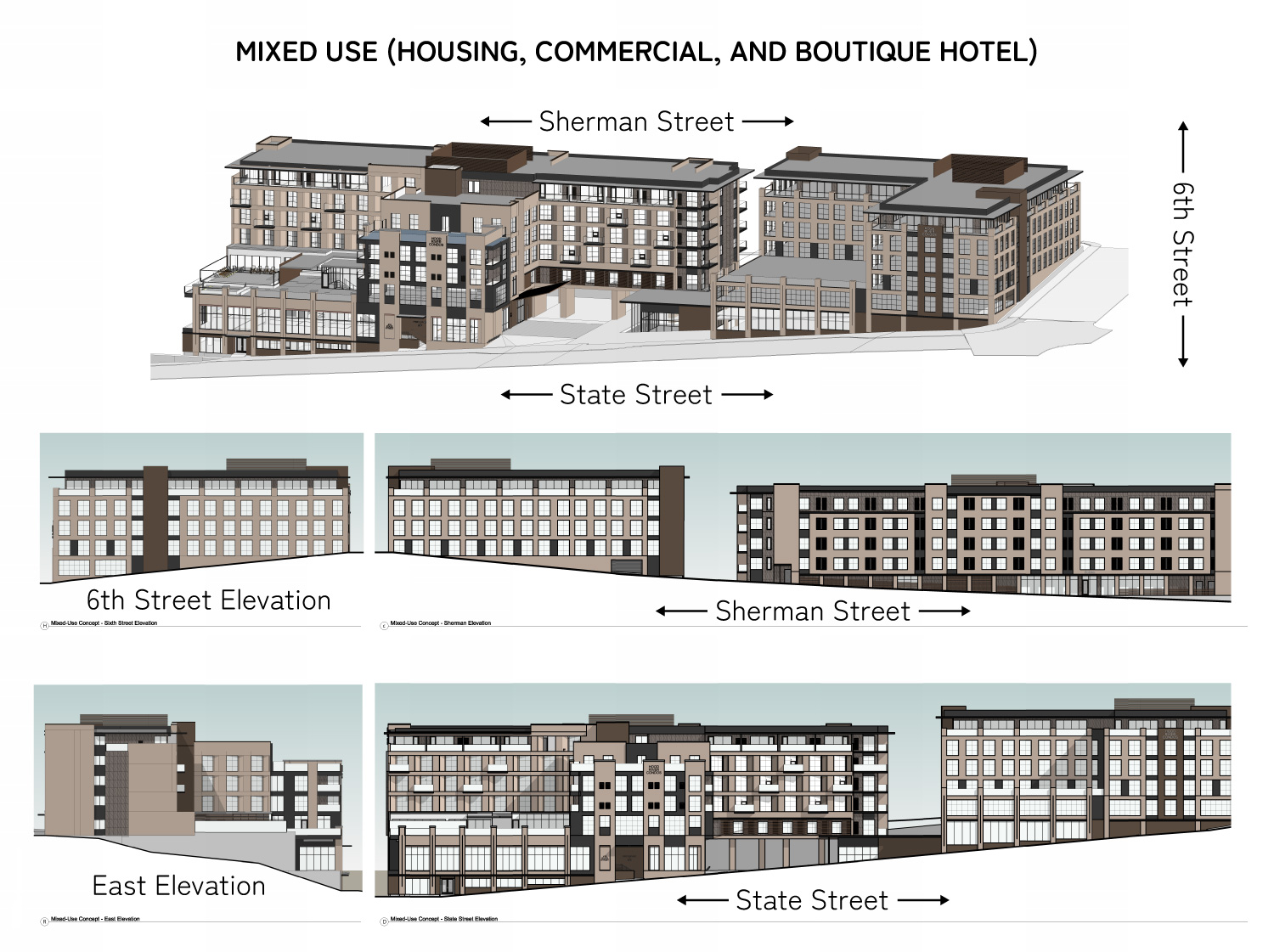
HOTEL VS. CONDOMINIUMS
The decision before the City is not simply about zoning compliance; it is about long-term economic strategy. The hotel option provides measurable, recurring economic benefits, creating stable employment, generating higher and more predictable lodging tax revenue, and strengthening downtown businesses while it maintains architectural compatibility with Hood River’s character and design standards.
Additional benefits of the hotel vs. the condominiums:
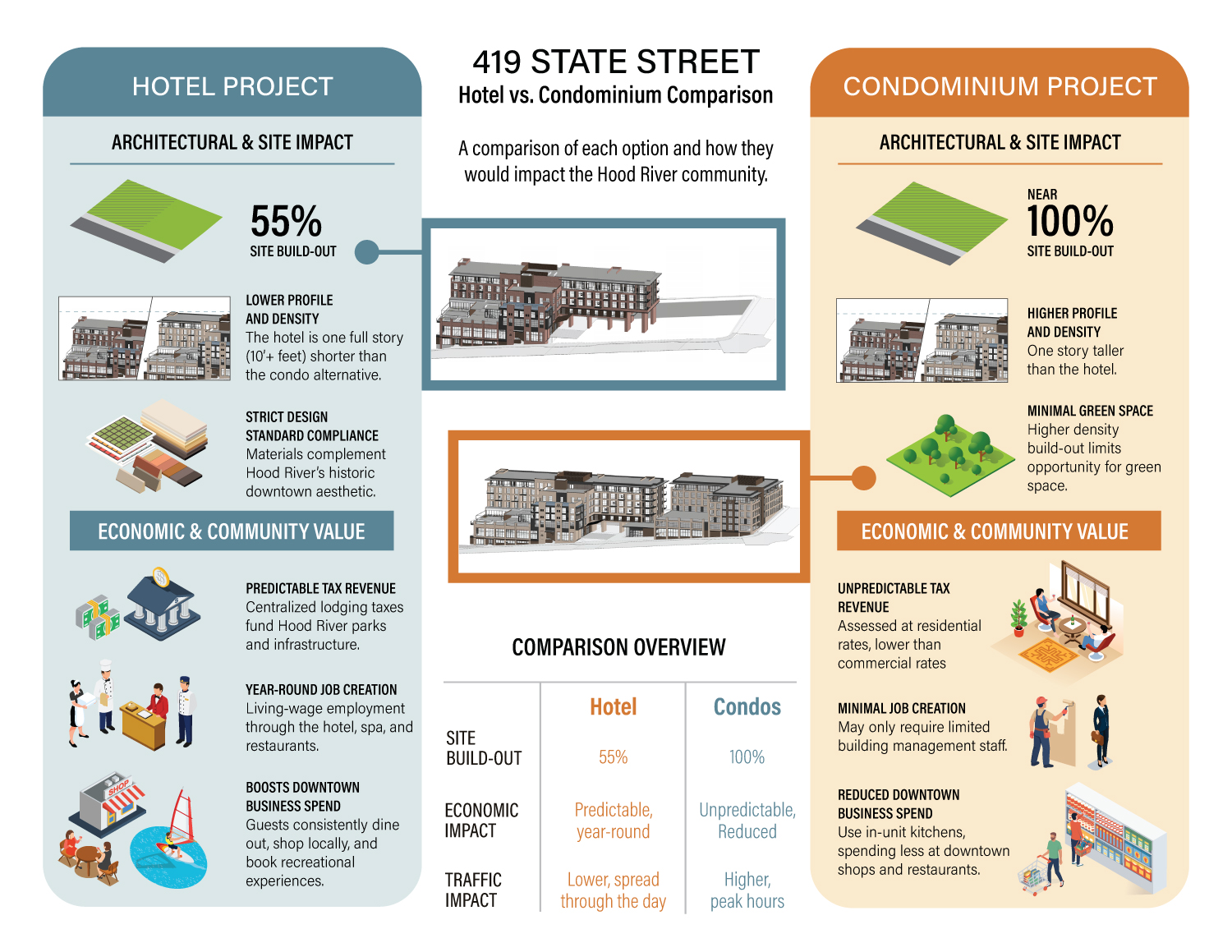
- The hotel uses a 55% footprint, compared to a 100% site build for the condominiums.
- The maximum height of the hotel is one story (10+ feet) shorter than the condominiums.
- The hotel would bring a high-end restaurant and spa that would add to the draw of Hood River and would bring jobs to the area.
Keep reading to learn more.
A Better Fit for the Site and Surrounding Area
As the comparison below illustrates, the hotel concept would occupy only about 55% of the site, leaving nearly half of the property open for landscaping, green space, and improved circulation throughout the development. In contrast, the condominium concept would utilize nearly 100% of the site, resulting in a much more fully built-out project with very limited open space. The proposed hotel would also be one full story shorter than the condominium building. These differences result in a development that is less dense, lower in height, and more consistent with the scale and character of the surrounding area, while also providing more breathing room on the site.
Hotels typically result in lower impacts from long-term residential density compared to condominium developments. Condominiums introduce a permanent residential population, with associated parking demand, vehicle trips, and daily activity. A hotel, by comparison, has a smaller on-site footprint and a more flexible pattern of occupancy, which tends to distribute traffic activity throughout the day rather than concentrating it around typical residential peak hours. This type of use can help maintain a better balance between development and neighborhood livability, while still contributing economic activity and visitors to the community.
In short, the hotel concept represents a lower-density, lower-profile development that preserves more open space while providing a use that integrates more comfortably with the surrounding area.